Showing posts with label racing. Show all posts

Thursday, September 8, 2011

Mercedes-Benz Classic celebrates the brand’s motor racing history at the ADAC Eifelrennen


The glittering motorsport history of the Mercedes-Benz brand is a big focus of Mercedes-Benz Classic. Participation in the ADAC Eifelrennen at the Nürburgring is one of the ways it is honouring this heritage: from 9 to 11 September 2011, drivers and fans will be joining together to celebrate a festival of historical motor racing, which is now in its fourth year in this format.The event will commemorate high points in the motorsport history of Mercedes-Benz: for example, when Rudolf Caracciola won the first Eifelrennen on 19 June 1927 in the category for sports cars with five-litre-plus engines, driving a Mercedes-Benz S-Type – a supercharged touring sports car. Or the birth of the Silver Arrows legend in 1934, when the Mercedes-Benz racing cars appeared at the Eifelrennen not in the usual white livery, but with their shiny aluminium bodywork exposed.


In 2008, the Eifelrennen was relaunched as a premium event for vintage vehicles. It is the perfect stage for showcasing some of the racing cars and sports cars in the Mercedes-Benz Classic stable. In 2011, the choice of classic vehicles has been guided largely by the triumphs of Juan Manuel Fangio at the Nürburgring.

The occasion for this special theme is the 100th anniversary of the birth of Fangio – Argentine-born and once the number one driver for Mercedes-Benz: at the Nürburgring, Fangio won the 1954 European Grand Prix in an open-wheel W 196 R racing car and also the 1955 Eifelrennen in a 300 SLR sports car. Besides that W 196 R with open-wheels one race transporter will be representing at this year’s Eifelrennen. Former Mercedes-Benz drivers Roland Asch, Dieter Glemser and Jochen Mass have also been lined up to appear as brand ambassadors.

Brand ambassadors Mercedes-Benz Classic at the 2011 Eifelrennen

Roland Asch

Born in Ammerbuch-Altingen, Germany, on 12 October 1950


A qualified car mechanic with his own successful car dealership in Ammerbuch near Tübingen, Asch has a passion not only for motorsport, but for the technology that makes motorsport possible in the first place. But he is no die-hard driver. Motorsport has always remained a hobby for him, albeit a time-consuming one.

Roland Asch began his career in slalom racing and hillclimbs (1976-1982), securing the title of German Hillclimbing Champion in 1981 before achieving further success as the overall winner of three Porsche 944 Turbo Cups (1987/88/89) and one Carrera Cup (1989), and as runner-up after moving to the German Touring Car Championship.

After starring in the German Racing Championship, he made his debut in the 1985 German Touring Car Championship. This was followed by engagements for the MS-Mercedes team in 1989, for the Snobeck-Mercedes team in 1990, for Zakspeed-Mercedes in 1991 and 1992, and for AMG-Mercedes in 1993. In 1992 (Eifelrennen, Hockenheim) and 1993 (Diepholz and twice at the Avus race in Berlin), he recorded five victories and a string of high-placed finishes. And in 1988 (Mercedes 190 E 2.3-16 for the BMK motorsport team) and 1993 (Mercedes 190 E 2.5-16 Evo II Class 1), he finished as runner-up with Mercedes-Benz in the German Touring Car Championship.

Since 1995 – after moving to the Super Touring Car Cup – he has driven for a wide range of other racing teams.

Dieter Glemser

Born in Kirchheim/Teck on 28 June 1938


Dieter Glemser’s career in the fast lane began with the Schorndorf Hill Climb race in 1960. Many classic racing triumphs followed in various mountain and circuit races on the Nürburgring.

Glemser began racing for Daimler-Benz AG in 1963, winning overall in a Mercedes 220 SE at the Poland Rally and taking second place in both the Germany Rally (including a class victory) and the Argentine Grand Prix. In the following year, too, Glemser participated in the triple victory of the teams Böhringer/Kaiser, Glemser/Braungart and Rosqvist/Falk at the Argentine Grand Prix.

Glemser celebrated victory once again in 1971 with a European Champion title with Ford in the touring car championships and a win at the 24-hour Spa-Francorchamps event, and also held the title of German Motor Sport Champion in 1973 and 1974. However, following a severe accident caused by tyre damage at the Macau Touring Car Race, Southeast China, in November 1974, he decided to end his active motorsport career.

For ten years from 1990, Dieter Glemser was a member of the Mercedes-Benz Motorsport team, and as department manager was responsible for organisation. From 2001 to 2008, he worked on a freelance basis for Mercedes-AMG and Daimler AG for sport and driver safety training and at classic events. He continues to drive at Mercedes-Benz classic events to this day.

Jochen Mass

Born in Dorfen near Wolfratshausen/Munich on 30 September 1946


Jochen Mass, originally a trained seaman, began his richly varied motorsport career in 1968 racing touring cars for Alfa-Romeo and as a works team driver for Ford between 1970 and 1975. During this time, he won the 24 Hours of Spa-Francorchamps (1972). At the same time, he drove in Formula 2 (1973) and in 105 Formula 1 Grands Prix (1973/74 for Surtees; 1975-1977 for McLaren; 1978 for ATS; 1979/80 for Arrows; 1982 for March). With the 1985 German Sportscar Championship title and a stint as works driver at Porsche until 1987 under his belt, he was recruited for the Sauber-Mercedes team, also as a works driver.

He drove in Group C for this team until 1991. In the new Silver Arrow, the Sauber-Mercedes C 9, Jochen Mass won the 24 Hours of Le Mans together with Manuel Reuter and Stanley Dickens and finished runner-up in the 1989 World Championship. Three years later, Mass became involved in team management for the German Touring Car Championship.

Jochen Mass still represents Mercedes-Benz at historical racing events and at vintage super sports car events. Whether it’s a 40-horsepower Simplex from 1902 or a Mercedes-Benz 300 SLR from 1955 – Jochen Mass knows them all and drives them all.

Vehicles of Mercedes-Benz Classic at the 2011 Eifelrennen

Mercedes-Benz W 196 R (version with open wheels), 1955


In 1954, the Silver Arrows returned as Mercedes-Benz entered the Formula 1 fray with the W 196. The first race for this new 2.5-litre racing car, the French Grand Prix in July 1954, ended with a double victory for Juan Manuel Fangio and Karl Kling. The eye-catching ‘Streamliner’ proved to be the right choice for the high-speed track in Reims.

In most races in the 1954 and 1955 seasons, however, a classic open-wheel monoposto was used, which was better suited for race circuits with lots of bends. Three other victories were secured in the W 196 R in 1954; in the following season it was five; and in both years Fangio became the world champion.

Vehicle
Year of construction: 1955
Cylinder: R8
Engine size: 2496 cc
Performance: 290 hp (213 kW)
Maximum speed: approx. 300 km/h


Mercedes-Benz high-speed transporter, 1955

In 1955, Mercedes-Benz’s racing division created a high-speed transporter which incorporated the direct-injection, six-cylinder in-line engine of the 300 SL super sports car. Its job was to speedily transport broken-down racing cars to the workshop for repair, to bring in replacement cars as quickly as possible, and to transport others to test tracks with a minimum of fuss.
The 192 hp (141 kW) three-litre engine was fitted into the extended frame of a Mercedes-Benz 300 S luxury sports car. It could move the cab-over-engine truck, which weighed in at 2,100 kilograms, at an impressive 165 km/h. The range of the ‘express’ was around 600 kilometres, with fuel consumption of 25 litres per 100 kilometres – thanks to a 150-litre tank.

On the instruction of Rudolf Uhlenhaut, then head of passenger car development at Daimler-Benz AG, this one-off model was scrapped in December 1967. The Mercedes-Benz Classic Center spent several years building a replica of the transporter with its steel and aluminium body. This new edition of the express race transporter was finished in April 2001.

Vehicle
Year of construction: 1955
Cylinder: R6
Engine size: 2998 cc
Performance: 192 hp (141 kW)
Maximum speed: 170 km/h


Source: Daimler AG

Copyright © 2011, Mercedes-Benz-Blog. All rights reserved.

Tuesday, June 7, 2011

Mercedes-Benz-Blog TRIVIA - A racing great: Juan Manuel Fangio


Juan Manuel Fangio, the racing legend of the 1950s, would have turned 100 on 24th June 2011. His undisputable driving abilities stood as the perfect basis for a series of unprecented performances for the Silver Arrows in the F1 season of the early 50s. The Argentinian built a special and strong relationship with his racing car, a 300 SLR of the W 196 R series, and fought hard to bring two important world championship titles for Mercedes-Benz in 1954 and 1955. Apart from the motorsport affiliation, Fangio was also recognized as a fine automobile afficionado, as he has already been running a Mercedes-Benz local dealer in Argentina since 1951. After retiring from Formula 1, Juan Manuel Fangio became brand ambassador and president of Mercedes-Benz Argentina S.A. until July 17th, 1974, when he sadly passed away in Buenos Aires, at the age of 64.

Read further interesting facts about the tremendous life of Juan Manuel Fangio:

>> Mercedes-Benz-Blog TRIVIA - A racing great: Juan Manuel Fangio


Copyright © 2011, Mercedes-Benz-Blog. All rights reserved.

Tuesday, September 29, 2009

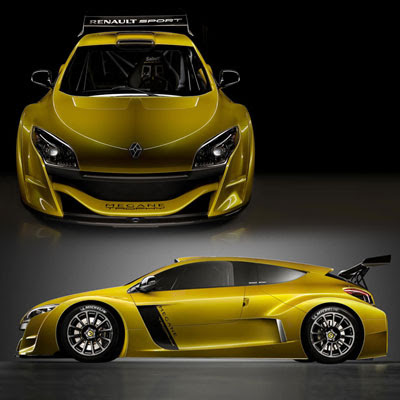
2009 Sport Car Renault Megane Trophy

The 2009 Megane Trophy will go on sale at the end of the year in the form of kit after the completion of its development programme which will enable existing cars to be upgraded.
The 2009 Renault Megane Trophy is based on the new Megane Coupe which is powered by the Renault-Nissan Alliance’s mid-rear 3.5-liter V6 24V engine that produces 360 hp.
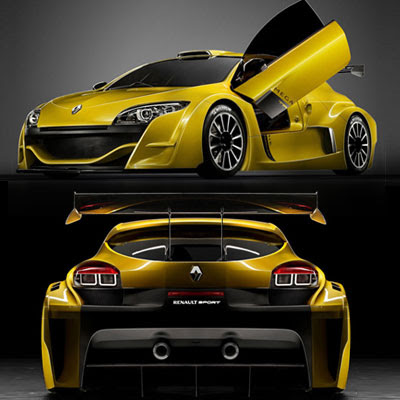
The front and rear light units and windscreen are from the Megane Coupe road car while flowing lines of the bodywork was designed from digital simulation technology to improve the aerodynamic.
The Renault Megane Trophy features front splitter which channel air flow to the extractors and rear diffuser and wing that generated downforce. Downforce has improved by 20 % with the refinements to the set-up and drag was reduced by 15 % , which together, represent a gain of almost 40% in terms of the new car’s aerodynamic performance over the previous generation vehicle.

Apart from that, the Megane Trophy also features butterfly doors reminiscent of the world of GT and sports-prototype racing. The V6 3.5 24V engine is mated to a semi-automatic gearbox with the same mechanical features as the current car, including an FIA-homologated sports-prototype tubular chassis, steering wheel-mounted paddle shift, double wishbone suspension with adjustable dampers, 18-inch wheels and Michelin tires.
The power of the standard 330 hp engine was boosted to 360 hp with the help from the new inlet manifold. Rebuild is still at every 5,500 km for the car’s reliability. According to Renault, with the new aerodynamic gains, the extra power from the engine will enable the 2009 Renault Megane Trophy to lap in similar times to those of a Porsche GT3.

Sunday, May 13, 2007

Cool poster in the window of a Pacifc Beach motorbike shop


Giuliano Maoggi - Winner of the '56 Motogiro of Italy - Ducati 125 Gran Sport
http://justacarguy.blogspot.com/2010/01/race-face-on.html
On Garnet, a couple blocks from the beach, southside of the road

Thursday, February 15, 2007

Nascar's unprecendented diciplinary wrist slap

So, after all these years, NASCAR is still finding guys who try to sneak in some performance boost. Micheal Waltrip's car was busted for being on the juice. I heard it was jet fuel, and thats an extremely powerful oxygenator. Adds O2 like a sledgehammer pounds rocks. Hard.

Well, I don't blame the driver, crew chief, or team.... just who said jet fuel wasn't a legal fuel? I'm of the Smokey Yunick school of NASCAR rules, if there ain't a rule against it, it's legal until they catch you... and make a rule against it.

So somewhen after Waltrip ran a great qualifying time for the Daytona 500 (most important race of the season) they do a tear down inspection... "when NASCAR found a suspicious substance in his intake manifold. After three days of examination, it was determined to be a fuel additive designed to enhance horsepower "

http://www.postchronicle.com/news/original/article_21264397.shtml

Yeah, jet fuel can do that.

Seriously, when is the France family going to clue in, those aren't anything like stock cars anymore, and probably haven't resembled factory stock cars, sine the 70's. Cripe, Elvis was still alive. The NASCAR race teams do not modify factory cars, run factory engines, or rims, tires, fuel tanks, body styles, etc etc. So why if they do not have any car parts in common with a dealership delivered car, do they have to run anything resembling pump gas? You don't believe for a moment that those cars make 700-900 horsepower on 91 octane do you?

Not that Brian France and family give a damn what the fans want, so long as NASCAR sells advertising... but we'd love to see either
1)dealership delivered race cars,
2)NASCAR drivers race anything they can find in a WalMart parking lot, or
3) race car team owners get free rein to put anything together that will be faster and corner better that the competition.

I vote for paint ball gun turrets in the pop up trunk lids that smear other drivers view, bolt on rocket engines ( http://justacarguy.blogspot.com/2006/12/once-men-were-allowed-to-be-men-crazy.html )for momentary blasts past the other cars, and John Force's crew making a car that will lap the field at 300 MPH and stop with BIG freakin parachutes deploying for pit stops, and new packed 'chutes being bolted on for the nextr 20 laps at 300mph. Go John Go!

Meanwhile, back in reality, this is the first time that NASCAR has ever thrown a teams points count into the negative before the season begins. There's something shocking about that.

"We were going to ratchet up penalties and you can see that's happened," Pemberton said. "We'll continue to raise the penalties as time goes forward until we get everybody's attention."
http://tennessean.com/apps/pbcs.dll/article?AID=/20070215/SPORTS09/702140405

The Waltrip crew chief and director of competition are both ejected from the Daytona 500, but Waltrip is still in, driving a teammates backup car. Best of luck Mike, give 'em hell and a forehead slap... but for pete's sake own up to it, you risked getting caught, glory in how close you came to getting away with it, don't pull this crap on us...
"While he took responsibility and said he was embarrassed by what has happened, Waltrip reiterated Thursday morning that the problem with his fuel was not something done with his knowledge or sanction by the team.
“What took place was the act of an individual or individuals,” he said. “It’s not a reflection on our team, our organization, our sponsors or our manufacturer.” http://www.thatsracin.com/242/story/2964.html

Keep the bull to yourself, you lose my respect and your dignity by asking anyone to believe the "Mystery Mechanic" made a performance alteration to your race car, in your garage, with your tools, under your hood, without you knowing, or when your entire crew was looking the other way and not watching the million dollar ride you risk your life in at 200mph. Sheesh... go back to where you left them, and put your pair back in your pants when you get out of the car, 'cause you sure have them in place during the races.

Tuesday, December 19, 2006

Smokey's Chevelle

The quintessential Yunick story has been retold so many times, and exaggerated so much in the telling, that today it’s almost unbelievable. The facts, if they can still be determined, are that Yunick showed up with a Chevelle at Daytona in 1967 for Curtis Turner to drive.

Turner won the pole, and the big manufacturers blew a gasket–a lone privateer wasn’t supposed to show up the factory teams like that.

The car blew up on the second lap of the race, avoiding further controversy, but when Yunick brought the car to the summer Daytona race, NASCAR inspectors, determined not to let their primary manufacturers be embarrassed again, gave Yunick a list of eleven mechanical items that had to be fixed before qualifying–which started in ninety minutes.

(Item #1, reportedly, was “Replace homemade frame with stock frame.”)

They removed the gas tank from the car, claiming that its non-exploding design was non-conforming. Yunick in exasperation told them, “Make that twelve items,” hopped into his tankless Chevy, and drove it back to its garage stall as the red-faced inspectors gaped.

The rulebook didn’t specify what kind of fuel lines the car could run, so Yunick had threaded eleven feet of 2" tubing through the frame, allowing it to hold almost a gallon of additional gas.

Within a week, the rulebook had been changed to allow only 5/8" tubing of a short length.

From http://www.gordonline.com/commish/020105.html and probably a dozen other sources.

From http://www.smokeyyunick.com/PressReleases/Reviews.pdf is a bit Smokey said after Earnhardt's death:
Yunick writes: “Moveable walls, concrete tracks, fueling by computer, air jacks ’stead of the 30 pound flying sledge hammers they use, mandatory retirement age, etc. When the hell they gonna get to doing something? Maybe after next ace gets killed? When they gonna get rid of the [deleted] restrictor plates and go to smaller engines? Don’t give me the [deleted] answer you can get killed in bathtub. It’s this simple: whoever’s running NASCAR has got his head up his [deleted].”

http://grantwcooper.com/smokey.html has a terrific tribute website, and so is http://www.legendsofnascar.com/smokey.htm

For more about Smokey: http://justacarguy.blogspot.com/2008/11/great-racing-photos-and-warbirds-and.html

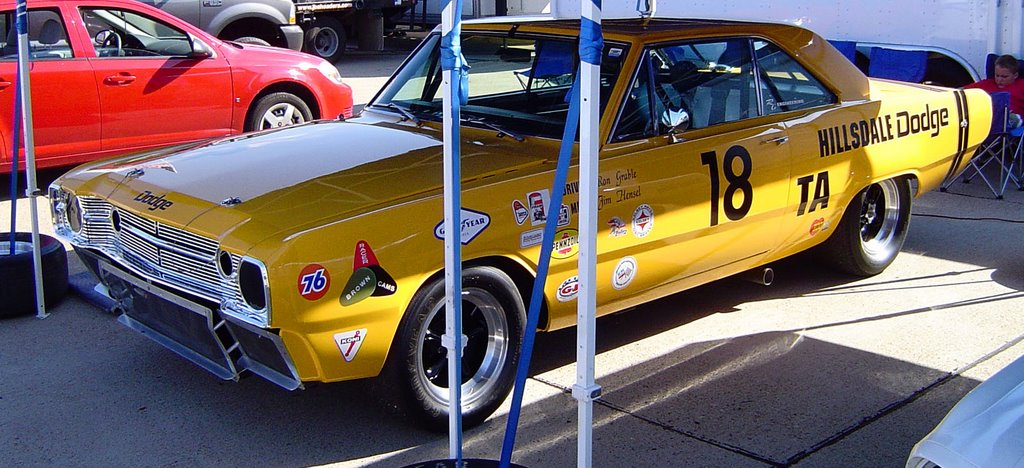
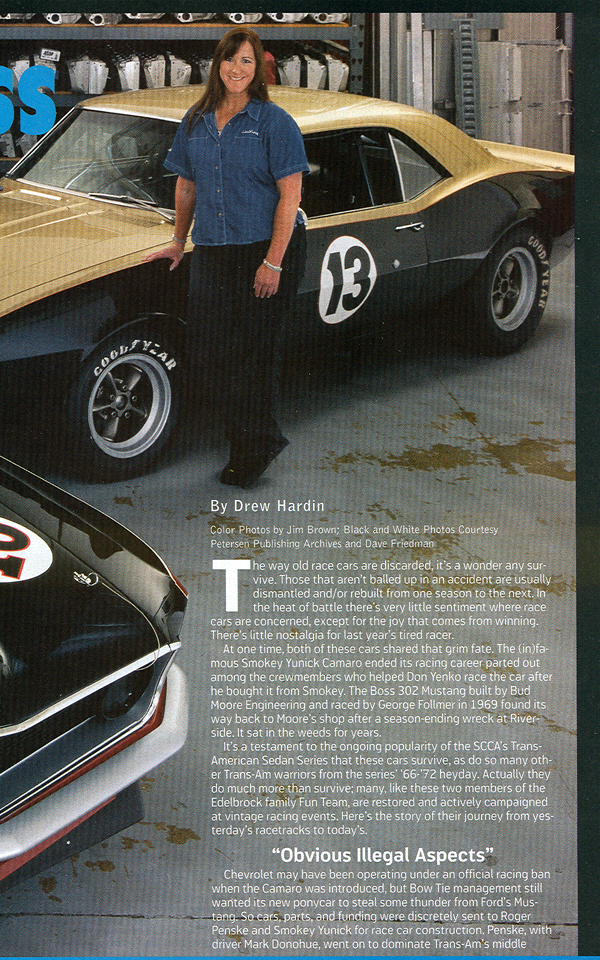
Smokey Yunick's Boss 302


Some of the fine artwork that Smokey performed on this 180 mph beast...

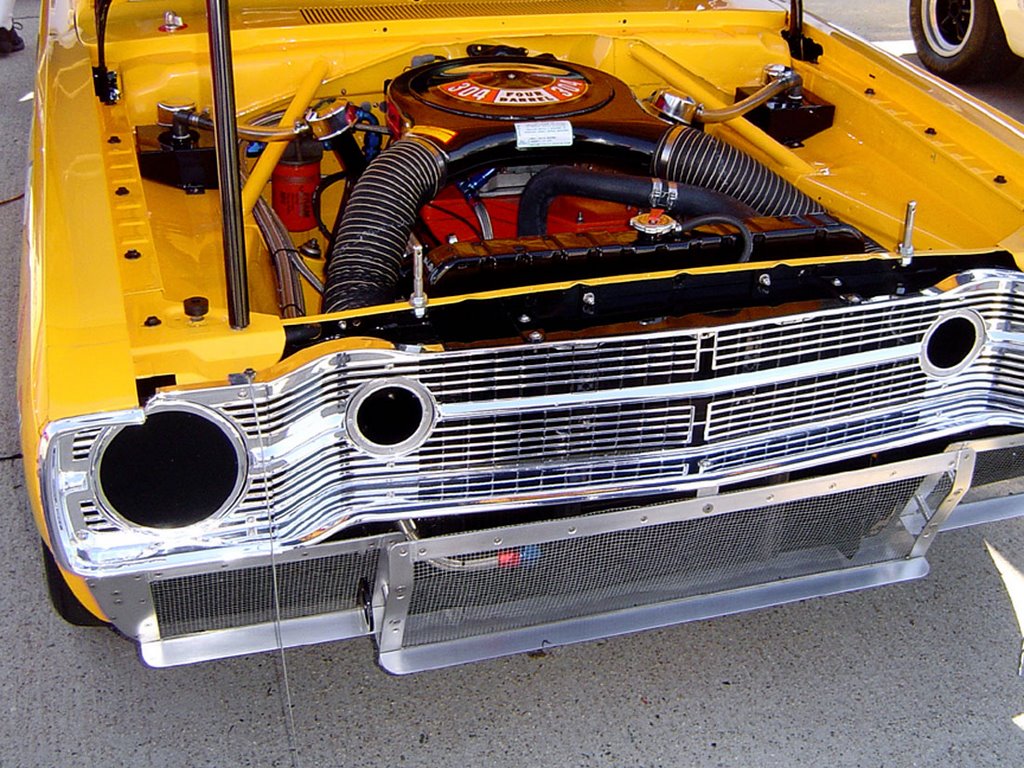
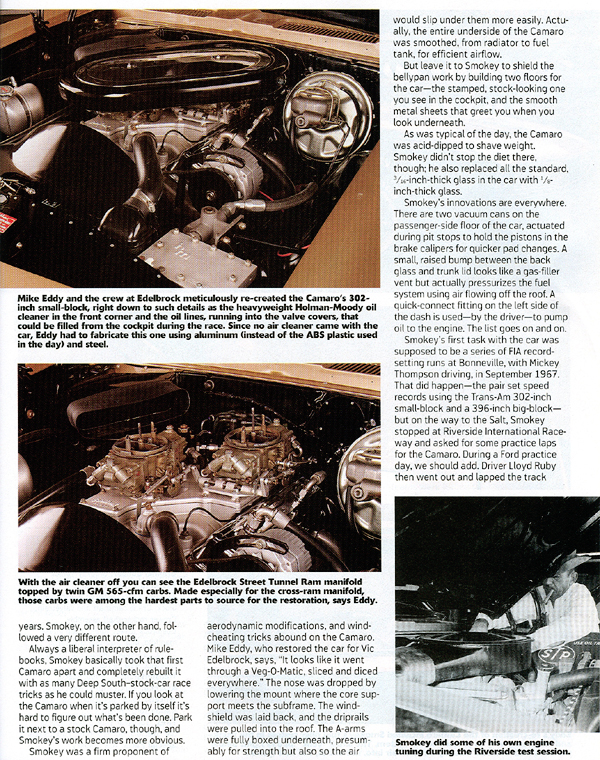
He took the starter, reversed the direction it pointed, reversed it's spinning direction, and mounted it next to the oil pan.... just to make room for the exhaust 4 into 2 into 1 hand welded collectors.

He took a wrong side / passenger side Australian steering box, and installed it in order to make room for exhaust on the opposite side from the starter mod I just mentioned.

For a better description of the tricks I just mentioned
http://www.trans-amseries.com/Drivers/RossMyers69Mustang.htm

http://www.ponysite.de/smokey.htm for more pictures

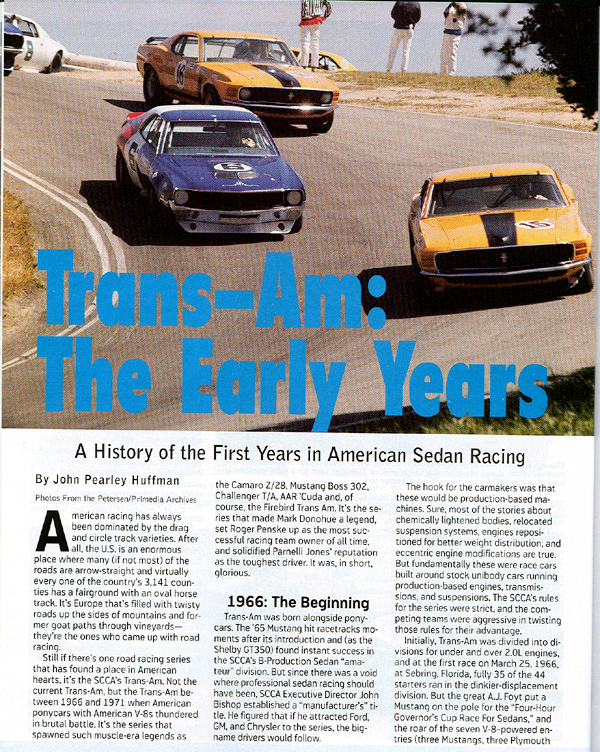
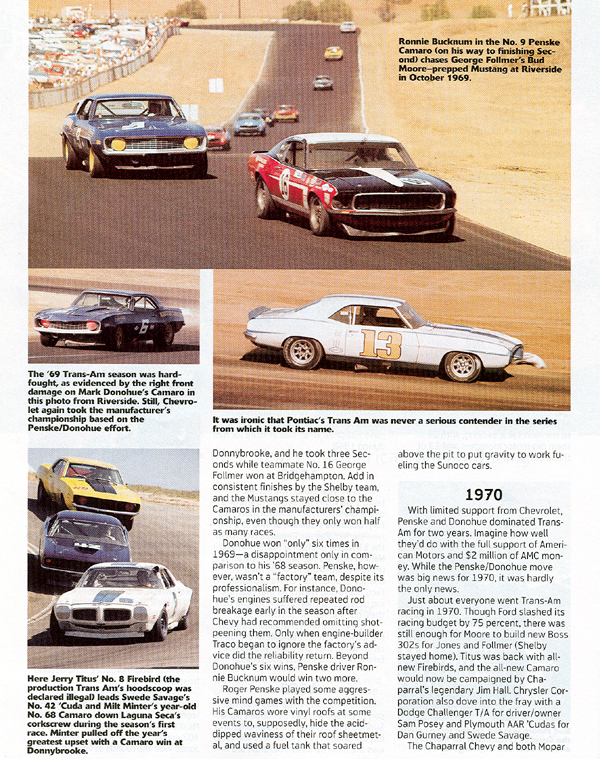
Now the conflicting info about this car is that one website says Vic Edelbrock owns and races it. Pictured here: http://www.trans-amseries.com/Drivers/VicEdelbrockMustang.htm is the formerly Follmer Boss 302. So, what's that about?

This website http://www.gordonline.com/commish/020105.html says Edelbrock owns the Smokey 302.... wonder why?

Sunday, November 12, 2006

British Racing Green

Isn't British... how about that? From a Road and Track magazine reader Hayden R. Shepley's comment, concerning an article in the Cyril Posthumus in April 1969... The origin of the color British Racing Green is from 1903 when the British wouldn't allow the Gordon Bennett race to be held in Britain. Ireland was asked to hold the race on their roads after Parliament had a special act passed to allow this. This act allowed certain public roads to be closed, thereby making this the first ever closed circuit race in automobile history. As a compliment to the Irish, all the English cars were painted a dark green. Previosly all the winning cars from this race, that used to be held in Napier were painted red, sort of indicative of those who hold the trophy from the previous race... kinda like the yellow Jersey, or Green sport coat.